
Ganesh Idol Artisan Workshop AI Portrait Prompt
Create an ultra-photorealistic 8K portrait of an Indian woman painting a Lord Ga...
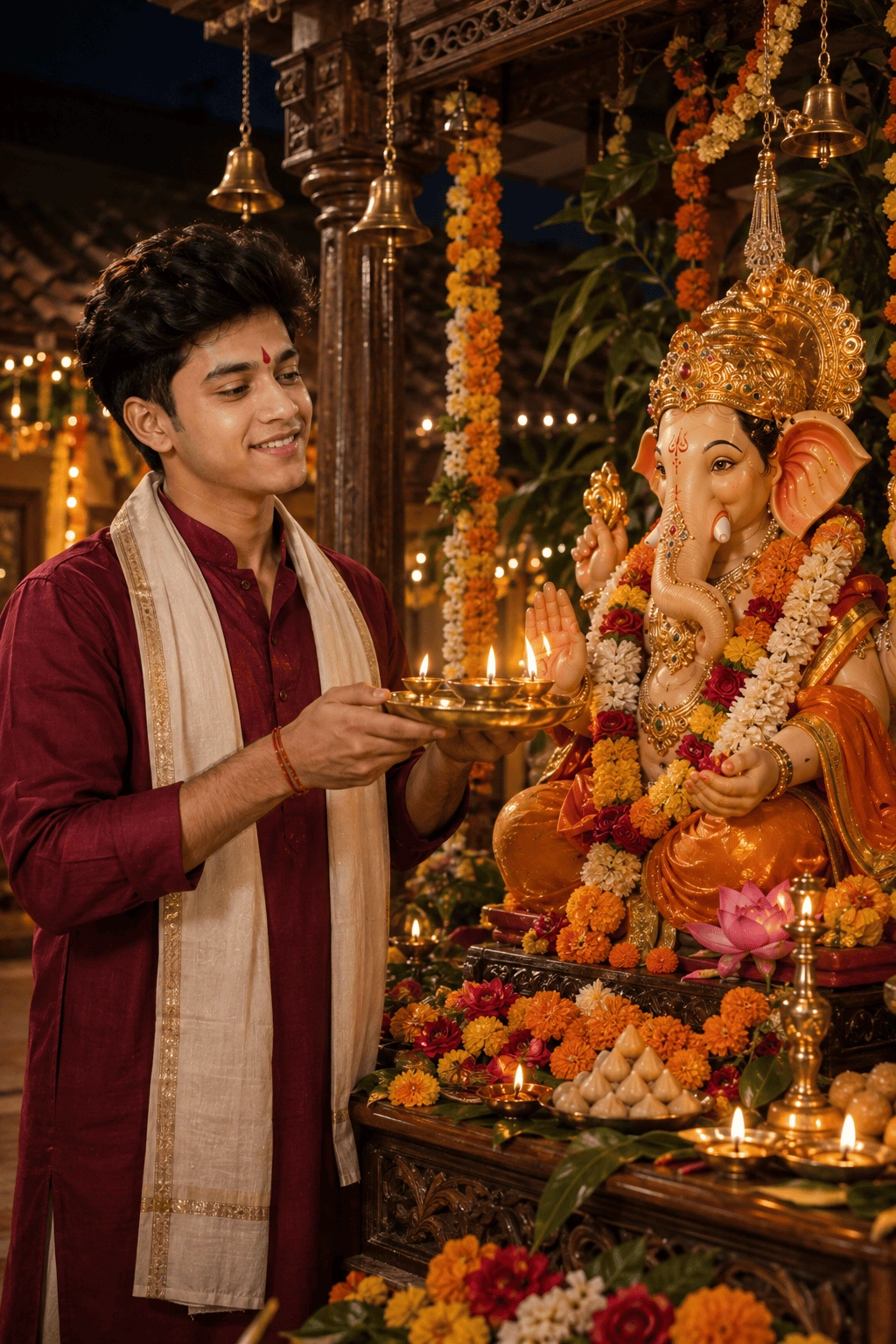
Create a realistic Ganesh Chaturthi aarti photograph using an uploaded photo as the identity reference, showing the same man in a maroon kurta and cream stole performing aarti before a beautifully decorated Ganpati Bappa in a traditional courtyard.
Use the uploaded photo as the strict facial and identity reference. Create a highly photorealistic, authentic-looking Ganesh Chaturthi photograph featuring the same man performing aarti in front of a beautifully decorated Ganpati Bappa.

Identity preservation is the highest priority. Preserve the man's real identity and recognizable facial characteristics from the uploaded photograph, including his original face shape, facial proportions, skin tone, eyes, eyebrows, nose, lips, cheeks, jawline, forehead, hairline, hairstyle, apparent age, and unique facial details.

Do not redesign, beautify excessively, replace, or reinterpret his face. The final result must clearly resemble the same person from the uploaded photograph.

Position the man naturally facing toward Ganpati Bappa rather than toward the camera. His head and gaze should be gently and naturally turned toward the idol with a genuine devotional expression. Use a believable three-quarter or side facial angle that keeps enough of his facial features visible for strong identity recognition while clearly showing that he is looking at Bappa.

Do not make him look directly into the camera. His attention should remain focused on Ganpati Bappa, creating the feeling of an authentic worship moment captured naturally during aarti.

Integrate the face seamlessly with the head, neck, shoulders, torso, and body. The facial angle must follow the body's pose and camera perspective. Match the facial lighting, shadow direction, skin complexion, sharpness, depth of field, and perspective with the surrounding environment.

Avoid any visible face-compositing effect. The transition between the face, ears, jawline, neck, hairline, and shoulders must be completely natural. Preserve realistic skin pores, subtle complexion variation, fine facial texture, natural highlights, and believable shadows.

Dress the man in a sophisticated deep maroon traditional kurta with a cream-colored stole. The kurta should have realistic fabric texture, natural folds, seams, subtle creases, and physically believable interaction with the warm festival lighting. The cream stole should fall naturally around his shoulders with realistic fabric weight and folds.

Have him naturally hold a traditional glowing brass aarti thali toward Ganpati Bappa. The thali should be physically believable in his hands, with anatomically correct palms, fingers, wrists, and grip. Include small glowing diyas within the thali, producing warm golden flames and subtle light reflections across the brass surface.

Make the man's posture respectful and natural, with his body oriented toward the idol. His facial expression should communicate devotion, peace, reverence, and quiet happiness without appearing exaggerated or artificially posed.

Create a traditional Indian courtyard as the main environment. Include beautifully carved wooden pillars with realistic wood grain and craftsmanship, hanging brass bells, traditional flower garlands, warm diyas, and subtle festive decorations.

Place a grand clay Ganpati Bappa murti prominently in front of the man. The idol should appear physically present and carefully handcrafted, with realistic clay texture, traditional Ganesha features, expressive eyes, detailed ornaments, elegant clothing, and a refined gold-toned crown.

Decorate the Ganpati murti naturally with fresh orange and yellow marigold flowers, delicate white jasmine, vibrant red roses, and tasteful floral arrangements. The decorations should have realistic petals, natural variation, believable volume, and physical contact with the idol.

Place authentic puja elements near the idol, including neatly arranged modaks and appropriate traditional worship items. Keep these objects naturally positioned around the devotional setup rather than randomly scattered.

Use warm evening illumination throughout the courtyard. Combine soft ambient evening light with the warm golden glow from the diyas and the aarti thali. The lighting should fall realistically across the man's face, hands, maroon kurta, cream stole, Ganpati idol, flowers, wooden pillars, brass bells, and nearby surfaces.

The aarti flames should create subtle warm highlights on the man's hands and lower face while preserving natural skin tones. Include realistic brass reflections from the thali and bells without making the metal excessively shiny or artificial.

Create realistic environmental shadows with consistent light direction. Ensure the face, body, idol, decorations, and architecture all appear to exist under the same physical lighting conditions.

Use a professional DSLR-style photographic aesthetic with natural depth of field. Keep the man and Ganpati Bappa clearly detailed while allowing distant courtyard elements to gradually soften into subtle background blur.

Preserve realistic individual hair strands, natural skin pores, detailed fabric fibers, flower textures, clay surfaces, brass materials, carved wood, and diya flames.

Use a natural camera perspective that captures the man's devotional side or three-quarter profile while keeping Ganpati Bappa clearly visible within the same composition. The framing should feel like a candid festival photograph captured at the exact moment of worship.

The final composition should not feel like a posed studio portrait. It should resemble an authentic photograph taken during a real Ganesh Chaturthi celebration, with the man's attention naturally focused on Ganpati Bappa and the aarti thali creating the visual connection between the subject and idol.

Maintain realistic scale between the man, aarti thali, Ganpati murti, courtyard architecture, and surrounding decorations. Avoid oversized heads, miniature objects, floating decorations, or physically impossible positioning.

Create a premium photographic result with realistic exposure, natural color rendition, detailed textures, subtle cinematic warmth, believable depth, accurate shadows, high dynamic range, and DSLR-quality clarity.

The emotional atmosphere should communicate devotion, reverence, peace, cultural tradition, and the intimate spiritual feeling of performing Ganpati aarti at home.

Final quality:
Ultra-photorealistic, high-resolution, DSLR-style festival photography, natural skin texture, realistic facial detail, accurate anatomy, realistic fabric, detailed Ganpati idol, physically believable diya lighting, natural depth of field, cinematic but authentic color grading, high dynamic range, refined photographic finishing.

Critical negative constraints:
Do not change the person's identity.
Do not generate a different face.
Do not alter the person's recognizable facial structure.
Do not make him look directly at the camera.
Do not create an unnatural head rotation.
Do not create a pasted-on face.
Do not create a face-swap appearance.
Do not create a floating head.
Do not create visible cutout edges.
Do not create mismatched skin tone.
Do not create an oversized head.
Do not distort the jawline.
Do not distort the eyes, nose, lips, ears, or cheeks.
Do not excessively smooth the skin.
Do not create plastic or artificial AI skin.
No asymmetrical eyes.
No malformed hands.
No extra fingers.
No missing fingers.
No fused fingers.
No duplicated limbs.
No extra arms.
No distorted aarti thali.
No impossible grip.
No malformed Ganpati idol.
No distorted trunk.
No broken ornaments.
No unrealistic flowers.
No floating puja objects.
No excessive glow.
No artificial light halos.
No harsh studio background.
No cartoon appearance.
No painterly effect.
No excessive HDR.
No unnatural saturation.
No heavy blur on the subject or idol.
No watermark.
No logo.
No random text.
No unwanted typography.
Learn how to use this prompt effectively and maximize the quality of your AI-generated output.
Devotional Ganpati Aarti Portrait is designed to transform an uploaded photograph into an authentic-looking Ganesh Chaturthi celebration scene. The same man is shown performing aarti before a beautifully decorated Ganpati Bappa, creating a candid devotional moment filled with warmth, tradition, and spiritual emotion.
The uploaded photo remains the strict identity reference. The man's recognizable facial structure, skin tone, eyes, nose, lips, hairstyle, hairline, age, and distinctive features are carefully preserved while he is naturally positioned in a three-quarter or side-facing angle toward Ganpati Bappa. Unlike a conventional portrait, the subject does not look at the camera, allowing the image to capture a more genuine moment of devotion.
The uploaded photograph is used as the facial and identity reference, maintaining the subject's recognizable facial structure, complexion, age, hairstyle, and distinctive features.
The subject naturally performs aarti while facing Ganpati Bappa, creating an emotionally meaningful devotional moment rather than a posed camera-facing portrait.
A traditional brass aarti thali with glowing diyas becomes an important foreground element, casting realistic warm illumination onto the subject and surroundings.
A grand clay Ganpati murti is decorated with marigolds, jasmine, red roses, and an elegant gold-toned crown.
Carved wooden pillars, hanging brass bells, floral garlands, diyas, and authentic puja elements establish a rich Indian devotional environment.
Natural skin pores, individual hair strands, fabric folds, realistic shadows, subtle background blur, and DSLR-style depth create the appearance of a genuine festival photograph.
This prompt is ideal for users who want to create a personalized Ganesh Chaturthi aarti photograph from their own image. It is particularly suitable for devotional portraits, Ganpati Bappa celebrations, festival profile images, social media posts, and traditional Indian cultural photography.
Why You'll Love It
The natural side-facing composition makes the image feel like a real moment captured during worship. Combined with strict identity preservation, warm diya illumination, detailed traditional décor, and realistic photographic depth, the result feels personal, emotional, and authentic.
Upload a clear photograph of the person and use it as the strict identity reference. The prompt is designed to place the same person naturally into a Ganesh Chaturthi aarti scene while maintaining his recognizable appearance and creating a genuine candid-photography look.
The most important visual relationship is between the man's gaze, the glowing aarti thali, and Ganpati Bappa. Keep his head naturally turned toward the idol and use the warm flame light to connect both subjects visually. A subtle three-quarter profile generally provides a better balance between recognizable identity and authentic devotional storytelling than a full side profile.
Explore more ganesh chaturthi prompts similar to this one.
Create an ultra-photorealistic 8K portrait of an Indian woman painting a Lord Ga...
Transform a reference photo into a powerful 1980s Ganesh Chaturthi documentary p...
Create an ultra-realistic devotional portrait of a young Indian girl in a soft p...
Create an amazing result using this prompt and share it with the Prompt Locator community. Selected submissions may be featured in this gallery to inspire other creators.
Help us keep Prompt Locator safe by reporting inappropriate content.
Help improve this prompt by submitting your suggestion.

