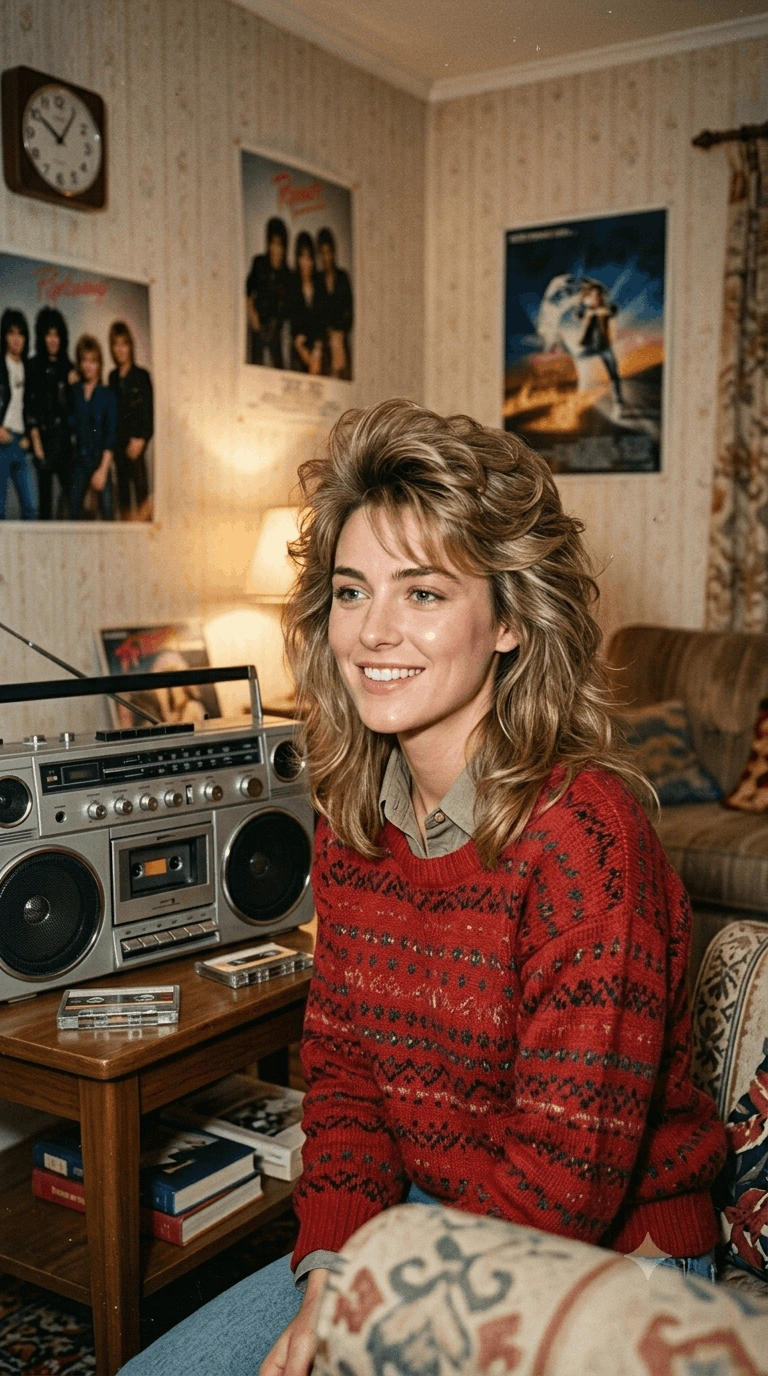
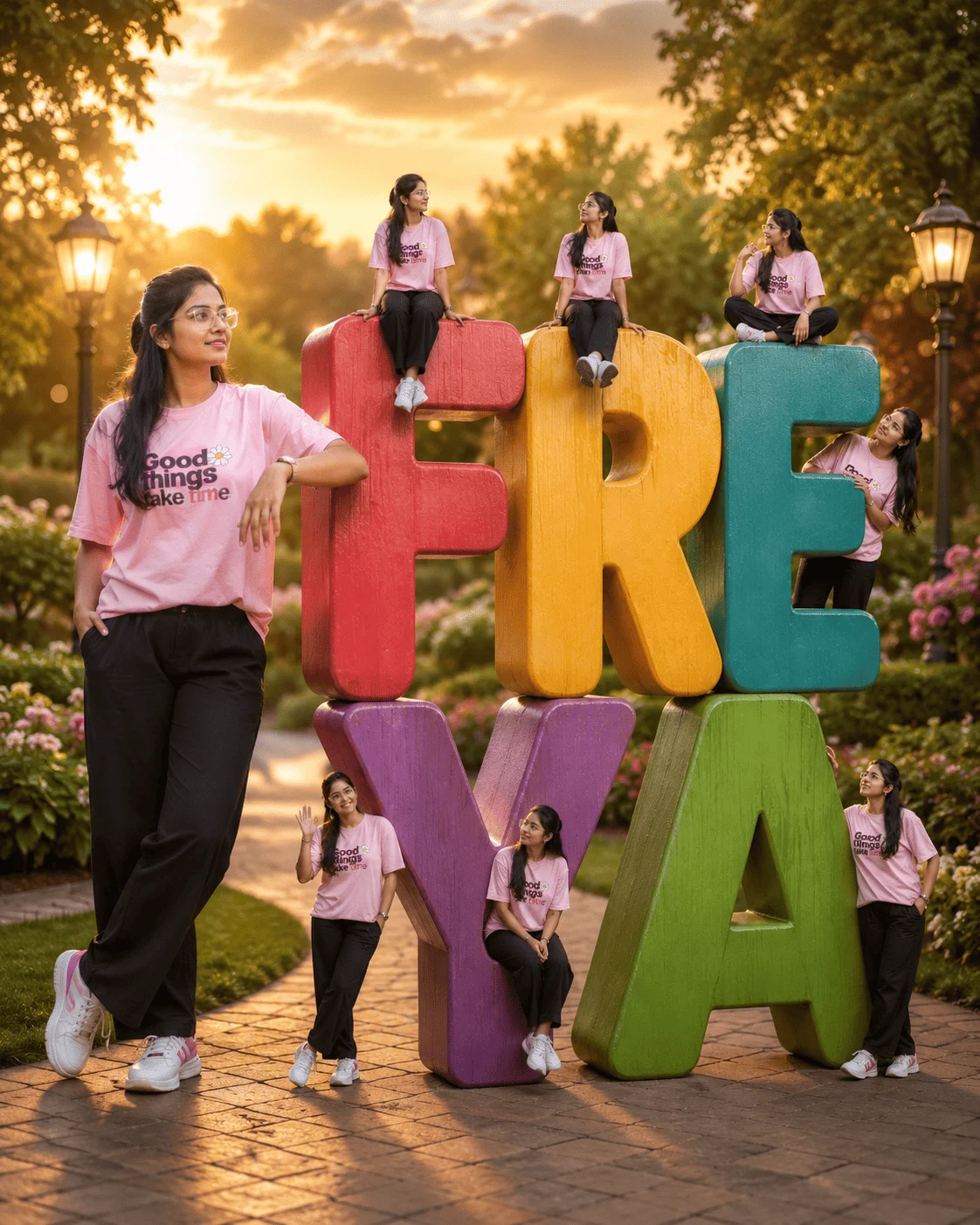
What Would I Look Like in the 80s? Retro Family Transformation
Transform an uploaded photo into an authentic 1980s portrait while preserving th...
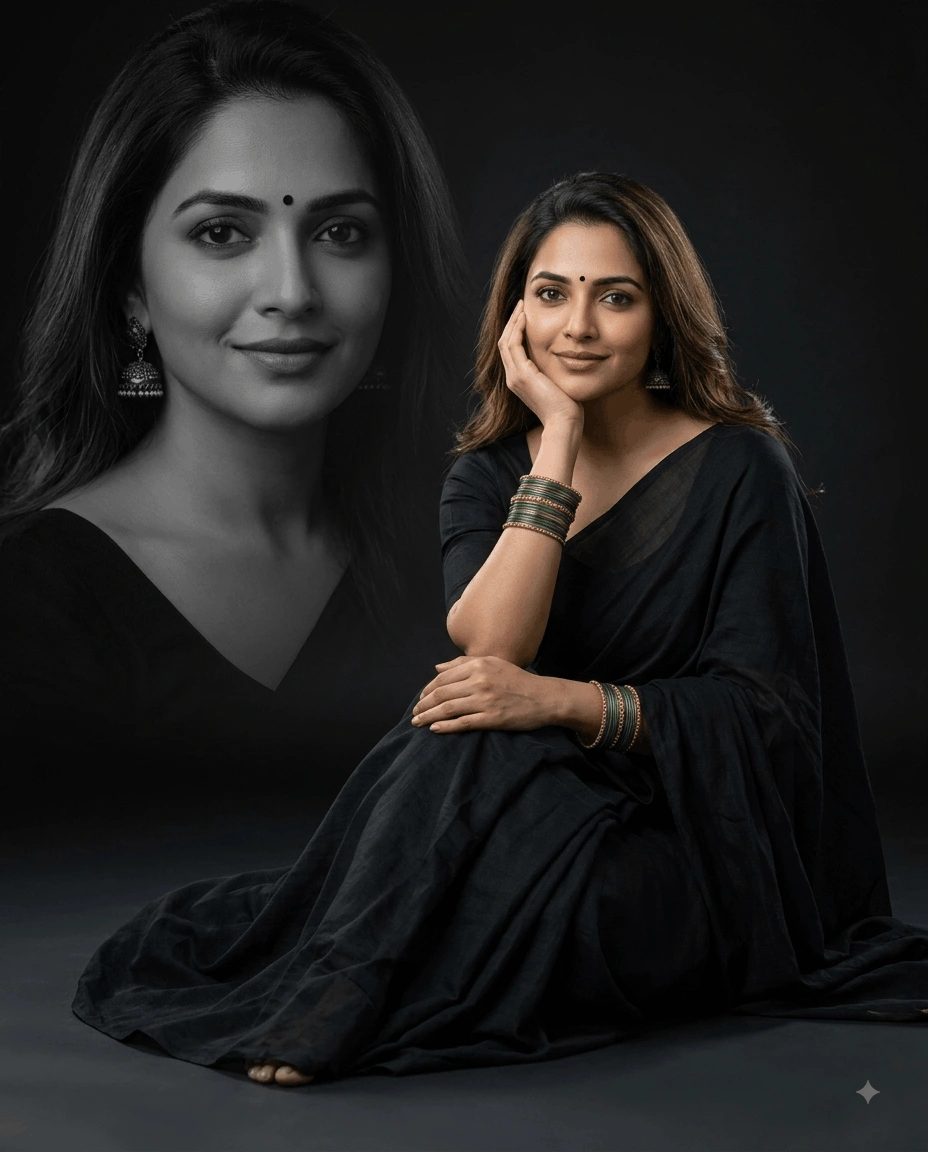
Create an elegant double-exposure portrait of an Indian woman in a black saree, combining a graceful seated pose with a softly blended monochrome headshot, dramatic studio lighting, realistic textures, and refined editorial composition.
Use the uploaded reference image, when provided, as the primary facial identity reference and preserve the subject's recognizable facial characteristics, natural facial proportions, skin texture, hairstyle, and overall likeness accurately.

Create a photorealistic, high-resolution editorial portrait of an elegant Indian woman seated gracefully on a smooth dark studio floor.

SUBJECT & STYLING:

The woman wears a sophisticated black saree with a matching black blouse. The saree should have realistic fabric folds, natural draping, subtle textile texture, and believable weight.

She has naturally long, softly styled hair with realistic individual strands and natural volume.

Add a small black bindi, traditional jhumka earrings, and stacked green-and-gold bangles.

Maintain understated and culturally authentic styling without excessive ornamentation.

POSE & EXPRESSION:

The woman is seated naturally on the floor in a graceful full-body pose.

Her body posture should remain relaxed, elegant, and anatomically believable.

One hand rests gently against her cheek while the opposite hand rests naturally on her knee.

Her fingers, wrists, elbows, and shoulders must have realistic proportions and natural positioning.

Give her a warm, subtle, natural smile with a calm and confident expression.

Avoid exaggerated posing or artificial facial expressions.

COMPOSITION:

Create a vertical 4:5 portrait composition.

Place the seated woman slightly right of center.

Show the complete seated figure while maintaining enough surrounding negative space for the layered background portrait.

On the left side of the composition, incorporate a large monochrome close-up head-and-shoulder portrait of the same woman.

The secondary portrait should be softly blended into the background rather than appearing as a separate floating image.

Both representations must clearly belong to the same woman and maintain consistent facial identity.

DOUBLE-EXPOSURE EFFECT:

Create a refined photographic double-exposure treatment.

The large background portrait should appear in monochrome black, charcoal, and soft gray tones.

Keep its opacity subtle enough that the dark studio background remains visible through the image.

The secondary portrait should have a calm expression and natural facial proportions.

Use smooth tonal transitions around the edges so the background portrait feels organically integrated into the composition.

Do not create obvious hard borders, duplicated faces, ghosting artifacts, or misaligned facial features.

BACKGROUND:

Use a deep black seamless studio background.

Add a subtle tonal gradient behind the woman and the monochrome portrait to create depth.

Keep the environment completely free of furniture, props, scenery, text, logos, or distracting elements.

The background should remain clean, sophisticated, and visually restrained.

LIGHTING:

Use soft diffused studio lighting focused primarily on the seated subject.

Add gentle rim lighting around the hair and shoulders to separate her from the dark background.

Maintain controlled shadows across the saree and body while preserving realistic facial detail.

Create subtle highlights across the skin, jewelry, bangles, and fabric folds.

The monochrome background portrait should receive softer, lower-intensity illumination than the main subject.

Avoid blown highlights, crushed facial details, artificial glow, or excessive HDR.

CAMERA & OPTICAL STYLE:

Eye-level camera perspective with a slightly elevated viewpoint.

Use an 85mm portrait lens aesthetic.

Use a shallow depth of field while keeping the woman's face, hands, jewelry, and key saree details sharply defined.

Maintain natural perspective without wide-angle distortion.

Create realistic optical separation between the foreground subject and background portrait.

COLOR & GRADING:

Use a sophisticated dark tonal palette dominated by black, charcoal, deep gray, muted green, and subtle gold accents.

Keep skin tones natural and believable.

Allow the green-and-gold bangles and jewelry to provide restrained color contrast against the black saree.

Apply refined editorial color grading with balanced contrast and smooth tonal transitions.

TEXTURE & REALISM:

Render realistic skin pores and natural complexion detail.

Preserve believable hair strands and fabric fibers.

Show detailed saree folds, blouse texture, metallic jewelry surfaces, bangles, and natural floor reflections.

Hands and fingers must be anatomically correct.

Maintain realistic body proportions and natural posture.

QUALITY:

Photorealistic professional fashion photography.

Ultra-detailed skin and fabric textures.

High-resolution 8K-style detail.

Refined editorial composition.

Natural anatomy.

Realistic studio lighting.

Professional portrait photography aesthetic.

Vertical 4:5 aspect ratio.

STRICT NEGATIVE PROMPT:

No identity change, no facial reshaping, no beautification, no altered facial proportions, no duplicate people, no duplicated faces, no ghosting, no malformed hands, no extra fingers, no missing fingers, no distorted anatomy, no unnatural pose, no plastic skin, no artificial skin smoothing, no CGI appearance, no 3D render, no cartoon style, no excessive HDR, no harsh glow, no oversaturated colors, no warped saree, no floating jewelry, no distracting props, no text, no logo, no watermark.

Aspect Ratio: 4:5
Learn how to use this prompt effectively and maximize the quality of your AI-generated output.
Create a striking black saree double-exposure portrait featuring an elegant Indian woman seated gracefully against a deep black studio backdrop. This professionally structured AI photography prompt combines traditional Indian styling, expressive posing, monochrome portrait layering, and refined studio illumination to produce a sophisticated editorial image.
The composition places the full-body seated subject slightly right of center while a large monochrome head-and-shoulder portrait is softly blended into the left side of the background. Traditional jhumka earrings, green-and-gold bangles, a subtle black bindi, natural hair, and realistic saree fabric details add cultural character while maintaining a contemporary fashion photography aesthetic.
Features a graceful black saree with coordinated blouse styling, traditional jewelry, colorful bangles, and subtle cultural details for an authentic Indian fashion portrait.
Combines the seated full-body portrait with a large softly blended monochrome head-and-shoulder image for a layered editorial visual effect.
Uses soft diffused illumination, subtle rim light, and controlled shadows to define the subject while preserving the dark atmospheric studio setting.
Prioritizes realistic skin texture, believable hands, accurate anatomy, detailed saree fabric, natural hair, and refined facial rendering.
This prompt is ideal for photographers, AI artists, fashion creators, Indian culture content creators, digital designers, portrait enthusiasts, and anyone creating sophisticated saree portraits for social media, portfolios, creative campaigns, or editorial projects.
Why You'll Love It
Rather than creating a standard saree portrait, this prompt combines graceful Indian styling with a carefully balanced double-exposure composition, giving the final image greater visual depth, personality, and artistic impact.
Follow these steps to generate a sophisticated Indian saree portrait with a graceful seated pose, accurate facial details, controlled studio lighting, and a seamless double-exposure composition.
For the most convincing double-exposure result, use a reference image with clear facial visibility and ask the image model to treat the background portrait as the same subject rather than a second person. Keeping the secondary portrait slightly softer than the foreground figure helps maintain visual hierarchy.
Explore more photo effects & filters prompts similar to this one.
Transform an uploaded photo into an authentic 1980s portrait while preserving th...
Transform an uploaded photo into a genuine candid 1980s portrait while preservin...
Transform your uploaded photo into a creative editorial scene featuring one life...
Create an amazing result using this prompt and share it with the Prompt Locator community. Selected submissions may be featured in this gallery to inspire other creators.
Help us keep Prompt Locator safe by reporting inappropriate content.
Help improve this prompt by submitting your suggestion.