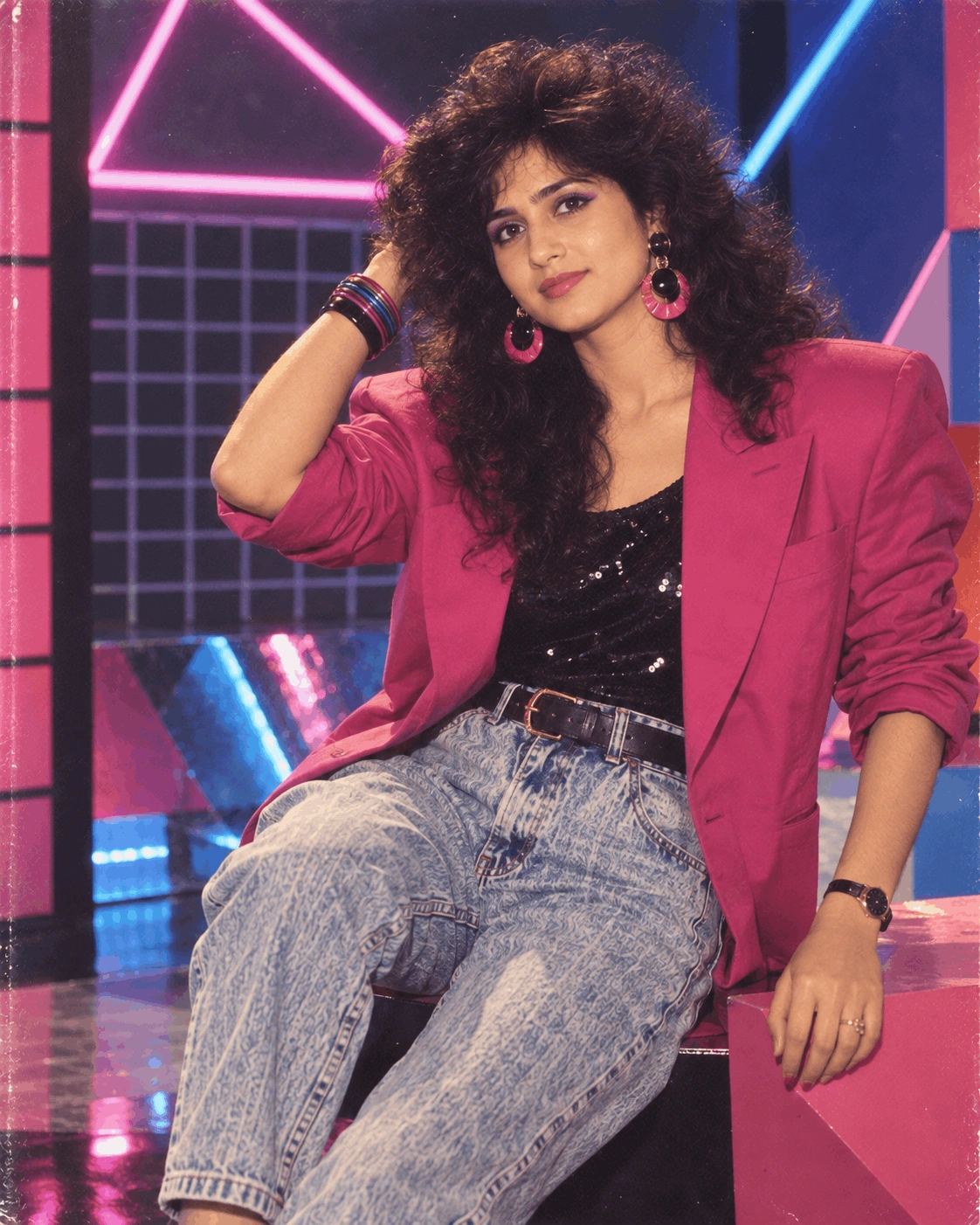
Iconic 80s Fashion Neon Pop Culture Portrait
Create a vibrant 1980s fashion portrait featuring a woman with voluminous curled...

Transform a reference photo into a realistic 1980s-era portrait while preserving recognizable facial identity, authentic period hairstyle, casual retro fashion, vintage room details, analog colors and genuine film-photography characteristics.
Using the uploaded photo as the primary identity reference, recreate the same person as they might realistically have appeared during the 1980s.

Preserve the person's recognizable facial identity, overall facial structure, natural proportions, authentic asymmetry and individual facial character. The result should clearly resemble the person in the reference image rather than becoming a generic 1980s model.

Do not modernize the face or apply exaggerated retro facial styling. The transformation should primarily affect the person's hairstyle, clothing, environment, lighting and photographic medium while keeping their recognizable identity intact.

Create a high-quality photorealistic candid portrait that looks as though it was genuinely photographed during the 1980s.

1980S HAIRSTYLE:

Give the person an authentic voluminous 1980s hairstyle appropriate to their appearance and presentation.

Create noticeable period-appropriate volume, natural lift and dimensional shaping rather than a contemporary haircut with artificial volume added afterward.

The hair should have believable individual strands, natural density, era-specific styling and slightly imperfect shaping consistent with an authentic 1980s personal photograph.

Avoid modern salon styling, contemporary influencer hair, overly polished beauty-editorial hair or obviously artificial retro wigs.

1980S FASHION:

Dress the person in authentic casual 1980s clothing appropriate for a relaxed indoor setting.

Use era-appropriate silhouettes, fabrics, colors, layering and casual styling.

The clothing should look naturally worn rather than like a modern fashion costume designed to imitate the decade.

Preserve realistic fabric texture, natural folds, stitching and slightly imperfect garment behavior.

Avoid contemporary streetwear, modern minimalist clothing, current luxury fashion, modern logos and obviously modern accessories.

POSE AND EXPRESSION:

Use a relaxed, candid pose that feels spontaneous and personal.

Avoid a rigid studio-fashion stance.

The person's body language should suggest that they are comfortably spending time inside their room, perhaps relaxing near the music player or casually interacting with the surrounding space.

Maintain natural posture, believable anatomy and authentic facial expression.

Do not force a standard frontal head position if the reference or natural candid composition suggests another direction.

Allow natural head orientation, gaze direction and asymmetry appropriate to the scene.

ENVIRONMENT:

Place the person inside a cozy retro 1980s room.

The room should feel genuinely lived-in and period-specific rather than like a modern room decorated with a few vintage objects.

Include vintage posters on the walls with era-appropriate graphic design, music, entertainment or cultural styling.

Place a recognizable 1980s boombox or cassette player somewhere naturally within the composition.

Include subtle period details such as vintage furniture, analog electronics, cassette tapes, warm-colored décor, textured surfaces and small everyday objects appropriate to the decade.

Do not overcrowd the room with exaggerated retro props.

The environment should remain believable and personal.

LIGHTING:

Use warm practical lamp lighting as the primary environmental illumination.

Add soft direct or built-in flash characteristics consistent with an everyday 1980s consumer camera.

Allow warm pools of light around the lamp and gentle falloff across the room.

Preserve believable shadows and natural exposure variations.

The flash should gently illuminate the subject without creating a modern studio-lighting appearance.

COLOR:

Use warm analog color reproduction.

Favor slightly warm skin tones, muted reds, faded browns, dusty oranges, subdued blues, cream, beige and other period-compatible tones.

Colors should appear naturally aged rather than heavily stylized.

Avoid modern high-dynamic-range color, extreme saturation, teal-orange grading or contemporary cinematic color treatment.

PHOTOGRAPHIC CHARACTER:

Make the image resemble a genuine 1980s consumer photograph.

Use soft flash characteristics, moderate optical sharpness, fine natural film grain, slightly faded tones and subtle exposure imperfections.

Add a lightly worn physical photo-print texture.

The photograph can contain extremely subtle signs of age such as gentle color fading, mild paper texture and small tonal inconsistencies.

The imperfections must remain photographic and believable.

Do not simply place a digital retro filter over an otherwise modern-looking photograph.

The entire image should feel as though the camera, lighting, room, clothing and photographic medium all belong to the 1980s.

COMPOSITION:

Create a natural candid portrait composition.

Keep the person as the primary visual subject while allowing enough of the room to establish the decade.

Include recognizable environmental details such as the boombox, posters and warm lamp within the frame.

Use believable camera distance and perspective consistent with a personal snapshot.

Avoid overly perfect symmetry or commercial studio composition.

The final photograph should feel like a treasured personal print discovered in an old family photo album.

REALISM:

Photorealistic human anatomy, recognizable identity, realistic skin texture, authentic hair strands, believable clothing construction, physically accurate room objects, natural lighting interaction, realistic analog photographic response and convincing aged print texture.

The final result must look like an actual photograph captured during the 1980s, not a modern photograph with a retro overlay.

NEGATIVE PROMPT:

generic face, identity drift, altered facial structure, unrecognizable person, excessive facial smoothing, plastic skin, waxy skin, artificial symmetry, modern influencer appearance, contemporary hairstyle, modern haircut, modern clothing, contemporary streetwear, luxury fashion, modern accessories, modern electronics, smartphone, laptop, LED lighting, modern furniture, minimalist modern room, modern studio backdrop, futuristic objects, excessive retro props, costume-like 80s styling, exaggerated caricature, cartoon, illustration, CGI, 3D render, modern cinematic grading, teal-orange grading, smartphone HDR, excessive sharpness, excessive clarity, DSLR bokeh, artificial background blur, excessive saturation, neon cyberpunk colors, heavy color grading, digital noise, harsh digital artifacts, excessive film grain, extreme sepia, extreme fading, damaged photograph, torn photograph, severe scratches, excessive dust, watermark, signature, floating objects, distorted anatomy, extra fingers, malformed hands, duplicated objects, modern logo, contemporary text, artificial vintage filter, modern photograph with retro overlay
Learn how to use this prompt effectively and maximize the quality of your AI-generated output.
This prompt reimagines the person from an uploaded reference photograph as they might have appeared during the 1980s. The facial identity remains recognizable and realistic while the surrounding visual language is completely rebuilt around authentic 1980s styling, including period hair, casual clothing, interior décor, analog lighting and photographic texture.
Rather than simply applying a retro color filter to a modern photograph, the prompt reconstructs the entire visual environment as a believable vintage snapshot. A cozy 1980s room, vintage posters, a cassette-playing boombox, warm lamp illumination, soft flash and naturally imperfect film characteristics work together to create the impression of a genuine photograph from the era.
The uploaded reference remains the foundation for recognizable facial structure and individual character while the styling is transformed into an authentic 1980s appearance.
An era-appropriate hairstyle adds authentic 1980s volume and silhouette without changing the person's underlying facial identity.
A vintage boombox or cassette player anchors the scene with a recognizable period-specific object and nostalgic atmosphere.
Vintage posters, warm lamps and subtle period décor transform the setting into a believable cozy room from the decade.
Fine film grain, faded tones, warm analog colors and slightly imperfect print texture reproduce the feel of an old physical photograph.
Soft flash, natural imperfections and an unstaged composition help the result resemble a genuine personal snapshot rather than a modern retro-styled shoot.
This prompt is ideal for anyone who wants to visualize themselves, a friend, family member or character as they might have appeared in the 1980s. It works especially well for nostalgia projects, retro portraits, vintage photo recreations, period-fashion concepts and personal identity transformations.
Why You'll Love It
The strength of this prompt comes from transforming the entire photographic context rather than simply adding a vintage filter. Period styling, interior objects, analog lighting, film grain and worn print characteristics work together to make the image feel genuinely photographed in the 1980s.
Upload a clear photograph of the person you want to transform. The reference should provide enough facial information for the model to preserve their recognizable identity while rebuilding the hairstyle, wardrobe, environment and photographic style around an authentic 1980s setting.
The most important instruction is to recreate the entire photographic context of the 1980s instead of simply applying a vintage filter. Authentic hair, clothing, room objects, lamp light, flash behavior, film response and physical print texture should all work together. Also allow the person's natural head direction and expression to vary according to the reference and candid scene rather than forcing the same face orientation used in other portrait prompts.
Explore more photo effects & filters prompts similar to this one.
Create a vibrant 1980s fashion portrait featuring a woman with voluminous curled...
Transform your uploaded photo into a creative editorial scene featuring one life...
Transform a reference face into a bold retro identity portrait featuring a confi...
Create an amazing result using this prompt and share it with the Prompt Locator community. Selected submissions may be featured in this gallery to inspire other creators.
Help us keep Prompt Locator safe by reporting inappropriate content.
Help improve this prompt by submitting your suggestion.